Od Memfis do Teb
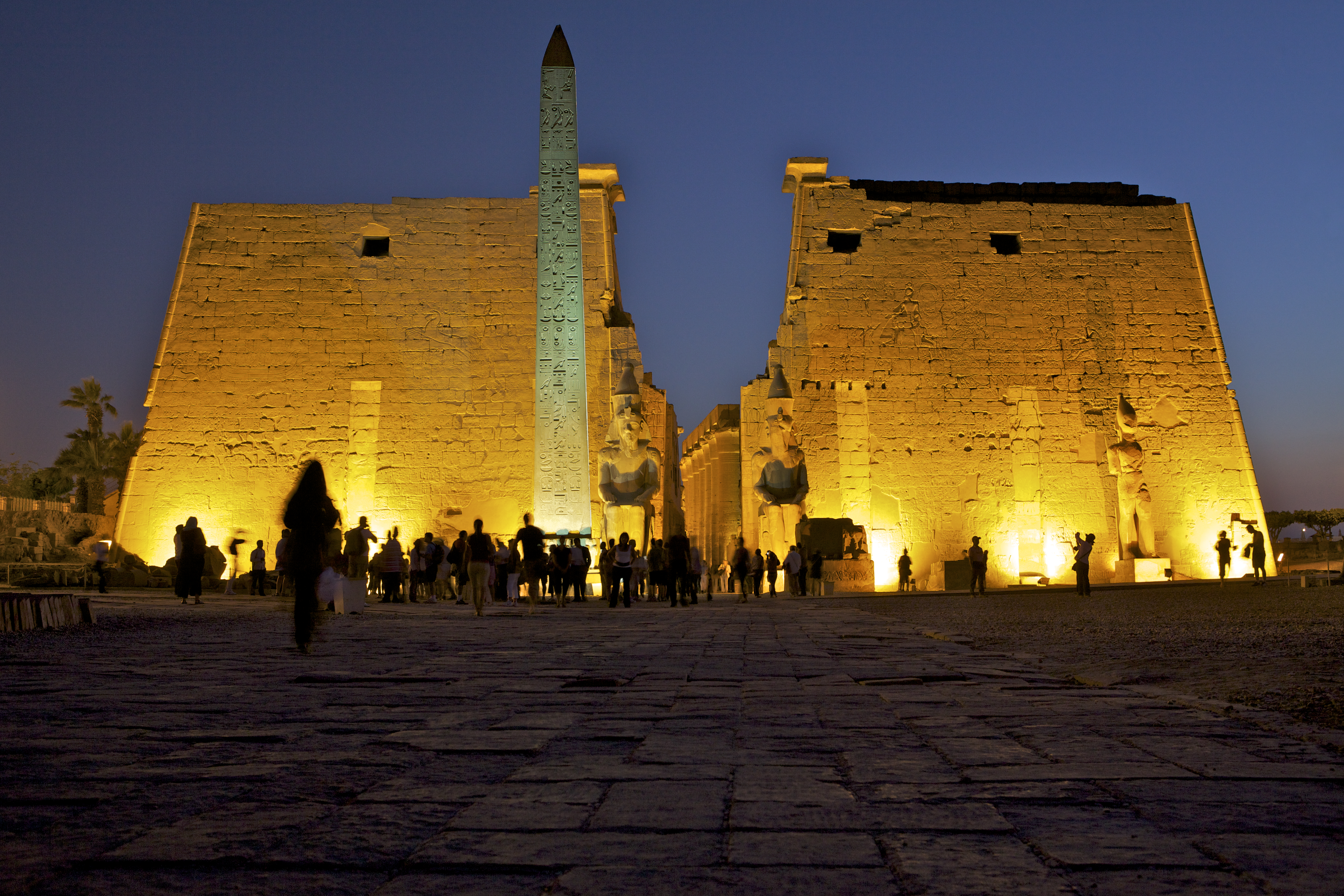
Pylon świątyni luksorskiej
W odległości 2,5 km na południe od zespołu świątynnego w Karnaku wzniesiona została świątynia luksorska. Oba kompleksy kultowe łączy długa aleja sfinksów, którą w trakcie świąt przechodziła procesja, na czele której kapłani nieśli świętą barkę z figurą boga Amona-Ra. Początki świątyni luksorskiej sięgają czasów Średniego Państwa, jednak najwcześniejsze zachowane i możliwe do zwiedzania części świątyni datowane są na panowanie Amenhotepa III. Obecne wejście do świątyni flankowane przez dwie potężne wieże pylonu wzniesione zostało w trakcie późniejszej rozbudowy świątyni przez Ramzesa II, który musiał wyraźnie zmienić oś ufundowanej przez siebie części, aby wybudowanego przez niego nowe wejście zbiegło się z osią alei procesyjnej flankowanej przez sfinksy. Przed pylonem Ramzesa II ustawione zostały potężne posągi ukazujące faraona oraz dwa obeliski, z których obecnie przed świątynią znajduje się tylko jeden. Drugi z nich, stojący pierwotnie po prawej stronie, mierzący podobnie jak pierwszy 23 metry wysokości, został wysłany w 1833 roku do Paryża, do którego dotarł trzy lata później. 25 października 1836 roku ustawiono go na Place de la Concorde, gdzie znajduje się do dzisiaj.
Pylon of the Temple of Luxor
A Luxor temple was erected 2.5 km south of the Karnak temple complex. Both cult complexes are connected by a long alley of sphinxes, which during the holidays went through a procession, at the head of which the priests carried a holy barge with a figure of the god Amun-Ra. The origins of the temple of Luxor date back to the times of the Middle Kingdom, but the earliest preserved and openable parts of the temple date back to the reign of Amenhotep III. The present entrance to the temple, flanked by two huge pylon towers, was erected during the later expansion of the temple by Ramesses II, who had to clearly change the axis of the part he founded so that the new entrance he built coincided with the axis of the processional alley flanked by sphinxes. In front of the Ramesses II pylon, enormous statues depicting the Pharaoh and two obelisks were placed, of which there is only one in front of the temple. The second one, originally standing on the right and measuring 23 meters like the first one, was sent in 1833 to Paris and reached it three years later. On October 25, 1836, it was placed on Place de la Concorde, where can be seen today to this today.